
Lupins in New Zealand – Where and When to See Them (2026)
Lupins are one of the highlights of summer in the South Island of New Zealand. From late November to January, these tall, colourful flowers brighten up lakesides, valleys, and roadsides with shades of pink, purple, and blue.
They’re not around for long, but when they bloom, they completely change the look of the landscape and make road trips through the region even more special.
When I lived in Queenstown, I quickly got hooked on seeing lupins each summer. I found myself planning road trips just to catch them at their peak, checking the season, timing drives, and making sure I had time to stop and enjoy the views.
Over the years, it became a bit of a tradition for me, and it’s one of the reasons I always look forward to summer in the South Island.
If you’re planning a trip, this guide will cover the best time of year to catch them, the top places to find them, and a few tips from my own experience to help you enjoy lupin season to the fullest.


When to See Lupins in New Zealand
Lupins only bloom for a short window, so timing is everything. The season usually runs from late November through to early January, but the sweet spot is early to mid-December. That’s when you’ll see the flowers at their brightest and fullest.
- Late November – The first blooms start popping up, but they’re still quite patchy.
- Early–mid December – Peak season. Fields are covered, and the colours are strong.
- Late December–January – Still pretty, but many flowers start to fade or go to seed.
- February – Sadly, you’ve missed them.
If you’re already planning to be in the South Island in December, it’s worth rearranging your road trip a little to line up with lupin hotspots. You won’t regret it.
The Best Places to See Lupins
You’ll find lupins scattered all over the Mackenzie Basin and beyond, but there are a few standout spots that guarantee a jaw-dropping backdrop.
Lake Tekapo
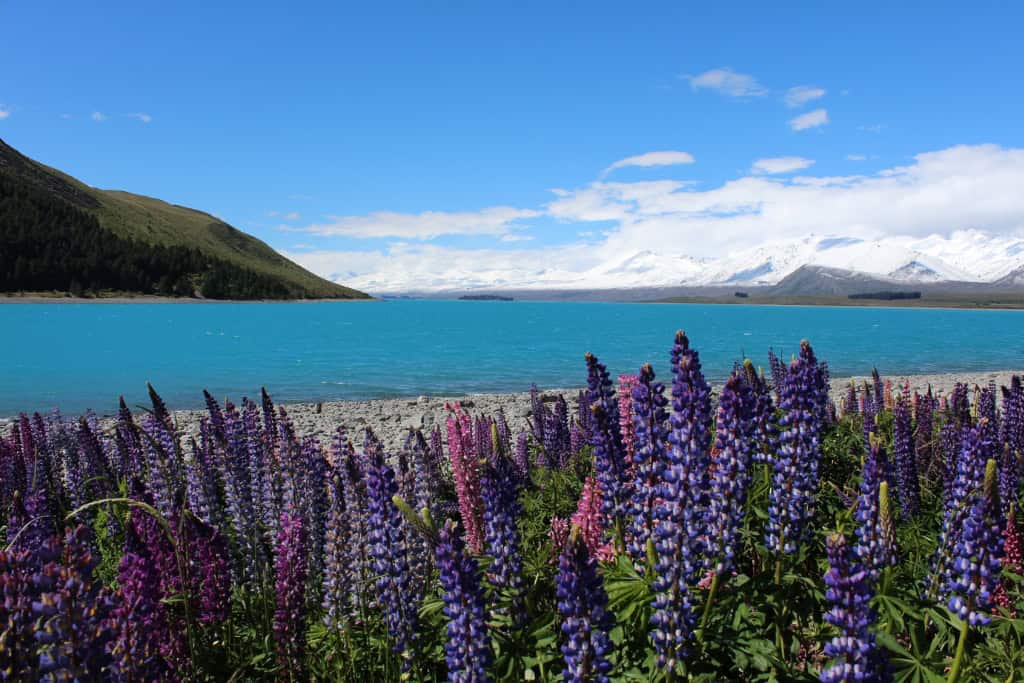
Lake Tekapo is THE lupin hotspot. Around the Church of the Good Shepherd and along the lakeshore, the blooms go absolutely wild.
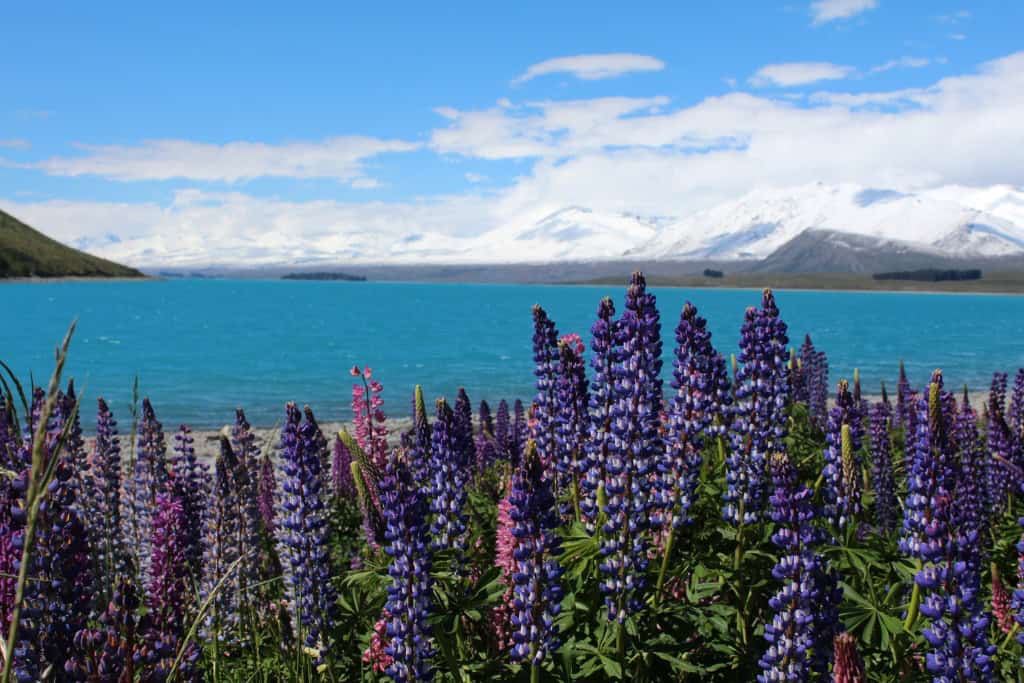
The contrast between the turquoise lake and the pink/purple flowers is unreal. It’s basically a photographer’s dream. Along with with the epic stargazing, seeing the lupins has to be one of the most famous things about Tekapo.
My tip: go either at sunrise or sunset. At sunrise, the light is soft and golden, and there are fewer crowds. Sunset can get busy, but the colours on the water and the surrounding mountains make it worth sticking around.
Lake Pukaki
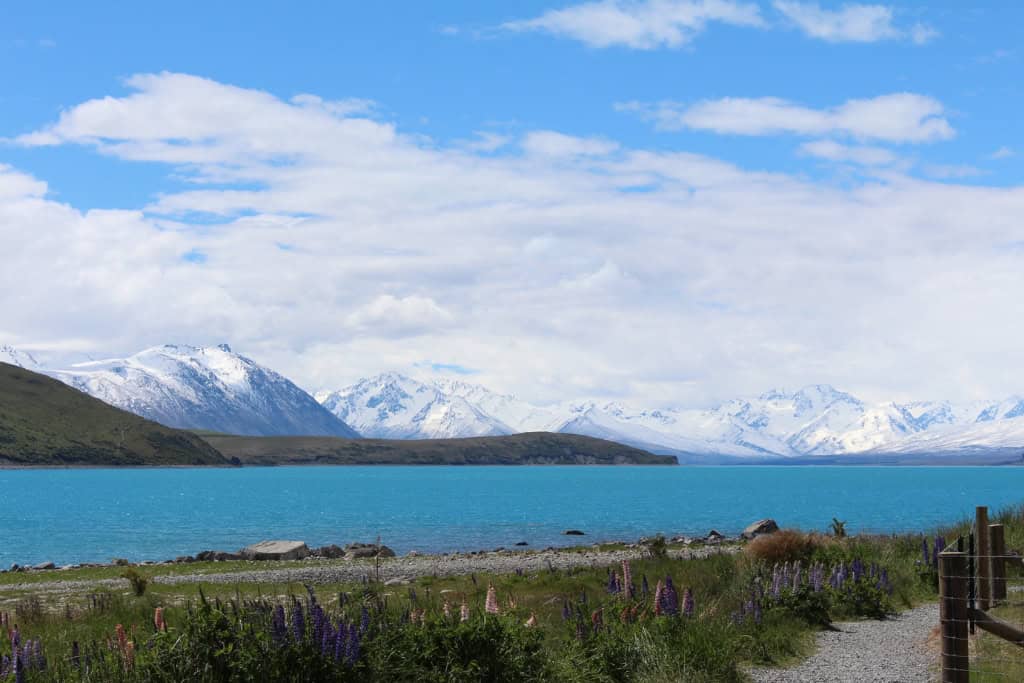
Just 40 minutes from Tekapo, Lake Pukaki is another favourite. On a clear day, you’ll get Mount Cook (Aoraki) rising in the distance, with lupins along the lakefront in the foreground.
The area around Hayman Road and the Mount Cook Alpine Salmon shop are both great spots to stop.
I honestly think Pukaki can feel more magical than Tekapo because it’s a bit quieter. Standing there with the Southern Alps reflecting in that bright blue water, it’s one of those “is this even real?” moments.
Lindis Pass
If you’re driving between Cromwell (or Wānaka) and Omarama, you’ll wind your way through Lindis Pass. In summer, lupins scatter the roadside in patches.
They don’t grow in dense fields here, but the bursts of colour against the rugged, dry hills make for epic roadside photography.
Just be careful when pulling over, some of the bends are pretty sharp!
Lake Ohau
Lake Ohau feels like a hidden gem compared to Tekapo and Pukaki. It’s more off-the-beaten-track, but that’s what makes it so special.
You’ll find lupins along the lake’s edge, and because it’s less touristy, you often get the flowers (and views) all to yourself.
If you’re road-tripping the area, I’d 100% recommend a detour here.
Roadside Blooms in Mackenzie Country
Honestly, one of my favourite lupin memories is just driving through the Mackenzie Basin and seeing them everywhere. Between Tekapo, Twizel, and Pukaki, the roadsides turn into one long line of colour.
Sometimes the best photo spots are the ones you stumble on unexpectedly. Just make sure to pull over safely, New Zealand highways don’t always have wide shoulders.
A Little Backstory
Lupins look like they belong in New Zealand’s wild landscapes, but they’re actually not native. They were first introduced in the 1940s to help with soil erosion.
Since then, they’ve spread far and wide across the South Island high country.
Technically, lupins are considered a pest plant because they can disrupt local ecosystems and waterways. But despite that, they’ve become a much-loved (and very photographed) part of the South Island summer.
It’s a bit of a love-hate situation, locals know they’re not great for the environment, but travellers and photographers can’t resist them.
Frequently Asked Questions About Lupins in the South Island, New Zealand
When is the best time to see lupins in the New Zealand?
The lupin season runs from late November to early January, with early to mid-December being the peak for the fullest and most colourful blooms. Visiting during this window gives you the best chance to see them at their peak.
Where can I find the most lupins?
Lupins are scattered throughout the Mackenzie Basin, but some standout spots include:
- Lake Tekapo – famous for lakeshore fields and the Church of the Good Shepherd backdrop.
- Lake Pukaki – quieter than Tekapo, with stunning lake and mountain views.
- Lindis Pass – scattered roadside clusters with dramatic hills.
- Lake Ohau – peaceful, off-the-beaten-path lakeside patches.
- Roadside blooms – unexpected smaller patches along the roads between Tekapo, Twizel, and Pukaki.
Are lupins native to New Zealand?
No, lupins were introduced in the 1940s to help prevent soil erosion. While they’re technically considered a pest in some areas, they’ve become a beloved part of the South Island summer landscape.
Can I walk through the lupin fields?
It’s best to stay on roadsides or designated paths. Walking through the flowers can damage them, and some areas are on private land, so always respect signs and fences.
Are lupins crowded during peak season?
Some spots, especially Lake Tekapo, can get busy in December. To avoid crowds, try early mornings, visit less-known spots like Lake Ohau, or explore roadside patches along Mackenzie Country.
Can I see lupins anywhere else in New Zealand?
While the South Island’s Mackenzie Basin has the most famous displays, lupins grow in smaller clusters elsewhere in the South Island.
However, if you want the full colourful fields with mountain and lake backdrops, the Mackenzie Basin is the place to go.
Quick Tips for Seeing Lupins in the South Island
- Timing is everything – Visit early to mid-December for peak blooms.
- Drive slowly and keep an eye out – Many lupins grow along roadsides and smaller lakes.
- Bring a camera or phone – Even small clusters make great photo opportunities.
- Avoid trampling flowers – Stick to paths, roadsides, and open areas.
- Explore beyond Tekapo – Spots like Lake Pukaki, Lake Ohau, and Lindis Pass are less crowded but equally beautiful.
Wrap up – Lupins in the South Island
Seeing lupins in bloom is one of the highlights of a South Island summer. The bright colours scattered across lakesides, valleys, and roadsides transform familiar landscapes into something fresh and exciting.
What I love most is that each trip feels different. Sometimes the flowers pop up unexpectedly on a quiet road, and other times they’re in full fields by a lake, creating that classic postcard view.
If you plan your trip around early to mid-December, leave plenty of time for stops, and take the scenic routes through the Mackenzie Basin, lupins can turn an ordinary drive into a really memorable experience.
Even if you’ve seen photos, the scale, colour, and combination of mountains and lakes make seeing them in person totally worth it.
